Muddlers & bar spoons
A muddler presses fruit, herbs and sugar to release flavour and juice; a bar spoon stirs drinks gently and layers ingredients. Wooden muddlers protect glassware and won't shred delicate herbs the way toothed metal ones can.
- Wooden muddlers are gentler on glass than metal or plastic
- A twisted handle helps the spoon spin smoothly when stirring
- Muddle herbs gently u2014 bruising mint too hard turns a drink bitter
- Bar spoons hold around 5ml, useful for small measurements
Showing 1–24 of 30 results
-
In stock
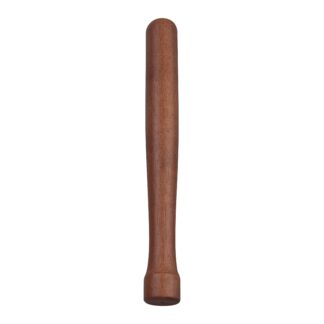
10 Inch Wooden Muddler
£4.99 Add to cart -
In stock

8 1/4″ Stainless Steel & Plastic Muddler
£5.99 Add to cart -
In stock

8 Inch Wooden Muddler
£2.99 Add to cart -
In stock

9″ Copper Plated Muddler
£13.99 Add to cart -
In stock

American bar spoon with red knob
£7.00 Add to cart -
In stock

Antique Brass Stainless Steel 23cm Muddler
£13.99 Add to cart -
In stock

Beech wood muddler, 25cm
£9.00 Add to cart -
In stock

Classic Bar Spoon 27cm
£14.99 Add to cart -
In stock

Copper Muddler 9″ (22.5cm), set of 12
£211.99 Add to cart -
In stock

Copper twisted bar spoon with masher
£10.50 Add to cart -
In stock

Elegant 13 Inch Beech Wood Muddler
£11.99 Add to cart -
In stock

Flat-end bar spoon with fork tip
£8.50 Add to cart -
In stock

Gold Plated Muddler 9″
£13.99 Add to cart -
In stock

Mini bar spoon with masher, 20cm
£6.50 Add to cart -
In stock

Muddler with toothed nylon head
£7.50 Add to cart -
In stock

Round-end bar spoon, 40cm
£9.50 Add to cart -
In stock

Stainless steel cocktail muddler, 20cm
£8.50 Add to cart -
In stock

Stainless Steel Muddler
£14.99 Add to cart -
In stock

Stainless Steel Muddler 20.5cm
£8.99 Add to cart -
In stock

Stainless Steel Muddler 9″ (22.5cm), set of 12
£89.99 Add to cart -
In stock

Stainless Steel Stirrer 6″ (15cm), set of 24
£22.99 Add to cart -
In stock

Stainless Steel Stirrer 7″ (18cm), set of 24
£28.99 Add to cart -
In stock

Teardrop Bar Spoon 30cm
£14.99 Add to cart -
In stock

Teardrop Bar Spoon 40cm
£17.99 Add to cart
Showing 1–24 of 30 results
Muddlers and bar spoons look simple, but the material and shape change how a drink turns out. A muddler crushes mint, fruit or sugar cubes to release oils and juice u2014 too aggressive and herbs turn bitter, so a flat wooden or blunt tip is more forgiving than sharp plastic teeth. A bar spoon does the quiet work of stirring cocktails smoothly and layering ingredients, and a well-balanced twisted handle makes both jobs easier on the wrist.
Which type do you need?
These are the main styles of muddler and bar spoon, and what each one suits.
| Type | Best for | Worth knowing |
|---|---|---|
| Wooden muddler | Mint, basil and other delicate herbs | Absorbs smells over time, and needs hand-washing not a dishwasher |
| Stainless steel muddler | Fruit, sugar cubes and firmer ingredients needing real pressure | Toothed metal tips can shred herbs and turn them bitter |
| Twisted bar spoon | Stirring smoothly and layering drinks over the back of the spoon | Takes a little practice to spin properly between your fingers |
| Weighted-handle bar spoon | Anyone stirring a lot of drinks who wants better balance | Costs more than a basic spoon for the same job |
How to choose
How hard should you actually muddle?
Less than you'd think. Muddling releases oils and juice; it doesn't pulverise everything into a pulp. With mint or other soft herbs, a few gentle presses and one light twist is enough u2014 press too hard and you tear the leaves, which releases bitter chlorophyll and turns a Mojito or Julep grassy. Firmer ingredients like citrus wedges or sugar cubes can take more pressure, since you're after the juice and oils in the peel rather than a delicate leaf. A flat-ended wooden muddler is more forgiving here than a toothed metal one, because it presses rather than shreds. If a recipe calls for muddling herbs, do it briefly and stop once the aroma lifts off the glass.
What does a bar spoon's twisted handle actually do?
The spiral shape lets the spoon spin between your thumb and fingers rather than being gripped and stirred like a teaspoon. Held loosely, with the back of the spoon against the inside of the glass, a twisted handle lets you rotate it quickly and smoothly with small finger movements, which chills and dilutes a stirred drink evenly without splashing or scratching the glass. It also helps with layering: pouring a heavier ingredient slowly down the twisted shaft and over the back of the spoon lets it settle in its own layer. A straight-handled teaspoon works for basic stirring, but it's harder to control and won't help at all with layering.
Wood or metal: which muddler should you buy?
Wood is the safer choice for most home use. It's gentle on herbs, doesn't scratch glassware, and a flat or lightly ridged end presses rather than tears. The downside is that wood can pick up smells over time and needs hand-washing. Stainless steel muddlers are more durable and dishwasher-safe, but many have small teeth designed to grip citrus peel and crush ice u2014 those same teeth shred soft herbs and release bitterness if you're not careful. If you mostly muddle mint for Mojitos or Juleps, choose wood. If you're regularly working with citrus wedges, sugar cubes or firmer fruit, a smooth-ended steel muddler handles that with less effort and lasts longer.
Common questions
Do I really need a proper muddler?
Not always. For an occasional Mojito, the end of a rolling pin or a wooden spoon handle will press mint and lime well enough. A proper muddler earns its place if you make muddled drinks regularly: it's shaped to press rather than pierce, sized to fit a highball or shaker, and won't leave splinters or paint from an improvised tool.
Why did my Mojito turn out bitter?
This usually comes down to muddling the mint too hard or for too long. Bruising the leaves releases fragrant oils, which is what you want, but tearing them further releases chlorophyll and other bitter compounds from inside the leaf. A few gentle presses with a flat-ended muddler is enough u2014 you should smell the mint lift off the glass quickly.
What size bar spoon should I buy?
Around 28 to 30cm is standard, long enough to reach the bottom of a mixing glass or tall highball without your hand touching the rim. A shorter spoon, closer to 20cm, is fine for smaller glasses but feels awkward in a full-size mixing glass, where you'll end up tilting it at an angle to stir properly.
Can I use a bar spoon to measure ingredients?
Yes, loosely. Most bar spoon bowls hold roughly 5ml, similar to a teaspoon, which is a useful rough guide for small amounts like a dash of syrup. It's not precise enough for anything that needs exact measuring, such as spirits in a recipe u2014 use a proper measure for those.
What's the difference between a bar spoon and a teaspoon?
A bar spoon is much longer, usually 28 to 30cm against a teaspoon's 12 to 14cm, so it reaches the bottom of tall mixing glasses and shakers. Most also have a twisted handle, which lets the spoon spin between your fingers for smooth stirring, and a flat or weighted end for layering drinks.