Shakers
A cocktail shaker chills and mixes a drink by shaking it with ice. Boston shakers (two tins) hold more and are what bars use; cobbler shakers (three pieces, built-in strainer) are easier for beginners but hold less.
- Boston shakers need a separate Hawthorne strainer
- Cobbler shakers have a built-in cap and strainer
- A standard shaker holds around 700ml, or two drinks
- French and Parisian shakers sit between the two in style
Showing all 4 results
-
In stock

Art deco cocktail shaker
£29.00 Select options This product has multiple variants. The options may be chosen on the product page -
In stock
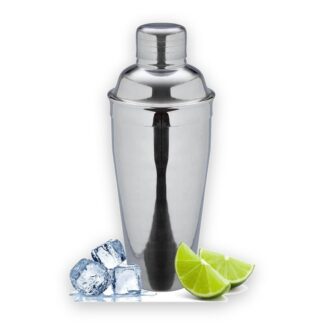
Deluxe stainless steel cocktail shaker, 750ml
£24.00 Add to cart -
In stock

French shaker, copper finish
£22.00 Add to cart -
In stock
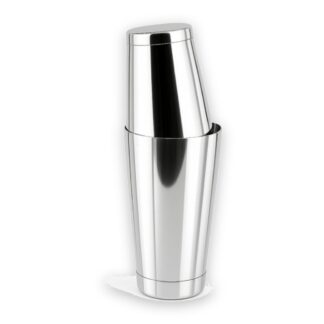
Standard stainless steel cocktail shaker, 750ml
£14.50 Add to cart
Showing all 4 results
A shaker is the one tool almost every cocktail needs, so it's worth choosing carefully. The main decision is Boston versus cobbler: Boston tins are what most bars use and hold more, while cobbler shakers are self-contained and simpler for a first attempt. Size matters too u2014 too little capacity and the ice can't move properly to chill the drink. Below we compare the main styles so you can match one to how often you'll actually be shaking.
Which type do you need?
Each shaker style trades ease of use against capacity and how professional it feels to use.
| Type | Best for | Worth knowing |
|---|---|---|
| Boston | Making cocktails often, or wanting the bartender standard | Needs a separate strainer and some practice to seal and open |
| Cobbler | Complete beginners who want something simple that works | Holds less than a Boston and the built-in strainer can clog |
| French or Parisian | A middle ground, for anyone who likes the classic look | Still needs a separate strainer, and parts are harder to match if lost |
How to choose
Boston or cobbler: which shaker should you actually buy?
If you're only going to own one shaker, a Boston is the better long-term choice. It holds more u2014 useful once you're making drinks for two people at once u2014 it's what you'll find behind most bars, and the tins are cheap to replace if one gets dented. The catch is that a Boston needs a separate strainer and takes practice to seal properly; tap the top tin at an angle to break the seal rather than wrenching it apart. A cobbler shaker is genuinely easier for a first go: the built-in cap and strainer mean no extra tools and no technique to learn. If you're not sure you'll keep making cocktails past the first month, a cobbler is the lower-risk buy.
What size shaker do you need?
Most shakers hold between 500ml and 750ml, which is enough for one to two drinks at a time including the ice. Anything smaller struggles once you add ice and multiple spirits, leaving no room to shake properly u2014 the ice needs space to move to chill and dilute the drink correctly. Anything much larger than 750ml is harder to shake one-handed and is really aimed at batching several drinks for a group. For everyday use at home, a shaker in the 700ml range is the sensible default: it comfortably makes a single cocktail with proper dilution and stretches to two smaller ones without spilling.
How do you stop a Boston shaker sticking shut?
A Boston shaker seals because the cold metal contracts slightly as you shake, which is exactly what you want during shaking but makes it harder to open afterwards. The fix is to hit the side of the top tin firmly with the heel of your hand, angled slightly downward, to break the seal, rather than twisting or pulling straight up. If it still won't budge, running warm water briefly over the join expands the metal enough to loosen it. Buying tins from the same set, rather than mixing brands, also helps u2014 the fit between two mismatched tins is rarely as easy to break apart.
Common questions
What's the difference between a Boston and a cobbler shaker?
A Boston shaker is two metal tins, or a tin and a glass, that fit together and need a separate Hawthorne strainer to pour the drink. A cobbler shaker is three pieces u2014 tin, built-in strainer and cap u2014 used straight out of the box. Boston shakers hold more and are the professional standard; cobbler shakers are simpler for a beginner but smaller, and the built-in strainer can clog with pulp or muddled fruit.
Which cocktail shaker is easiest for a beginner?
A cobbler shaker is the easiest to start with, because the built-in cap and strainer mean there's nothing extra to buy or learn. You add ice and ingredients, shake, and pour through the cap's small holes. A Boston shaker is only slightly harder once you've practised sealing and opening it a few times, and it's worth moving to if you start making cocktails regularly.
How much ice should go in a shaker?
Fill the shaker roughly two-thirds with ice for one drink, which usually works out at eight to ten standard cubes in a 700ml shaker. Too little ice and the drink won't chill or dilute properly; too much leaves no room for the ice to move around, which is what actually does the mixing and chilling work as you shake.
Can you use a jam jar instead of a proper shaker?
A lidded jar works for shaking in a pinch, and plenty of people start this way before buying anything dedicated. The main downside is straining: without a built-in or separate strainer you'll need a tea strainer or a slotted spoon to catch the ice and any pulp. It's a reasonable, low-cost way to try cocktail making before committing to a proper set.
How do I clean a cocktail shaker so it doesn't smell?
Rinse it immediately after use, since dried sugar and citrus residue are usually what cause lingering smells, then wash with warm soapy water and dry it fully before putting it away u2014 damp stainless steel left sealed shut is where odours build up. Most steel shakers are dishwasher safe, but hand-washing keeps the seal between Boston tins tighter for longer.