Coupe glasses
A coupe is a shallow, round-bowled stemmed glass holding roughly 150ml to 250ml. Originally a champagne coupe, it now serves shaken and stirred cocktails up. The curved bowl spills far less than a V-shaped martini glass.
- Coupes typically hold between 150ml and 250ml
- Suits cocktails served up, and sparkling wine at a push
- The rounded bowl is steadier to carry than a V-shaped glass
- Fine rims chip easily, so hand-washing is the safer option
Showing 1–24 of 47 results
-
In stock

Alex Coupe 9.5oz (27cl), set of 6
£46.99 Add to cart -
In stock
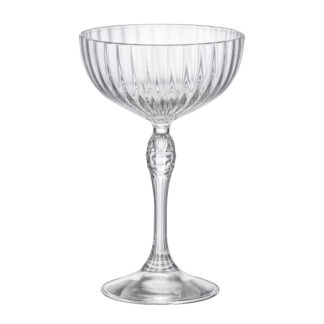
Americas 20s Cocktail Coupe 15.88cm H 23cl, set of 24
£266.99 Add to cart -
In stock
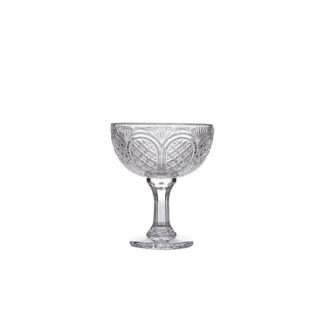
Astor Vintage Champagne Coupe Glass 23cl/8oz
£54.99 Add to cart -
In stock
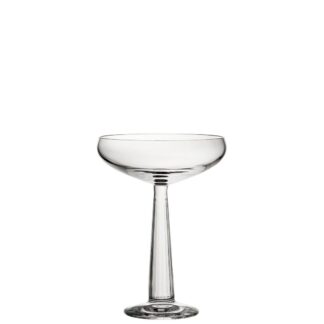
Big Top Coupe 9.5oz (24cl), set of 24
£82.99 Add to cart -
In stock

Botanist Coupe 5.5oz (16cl), set of 6
£64.99 Add to cart -
In stock
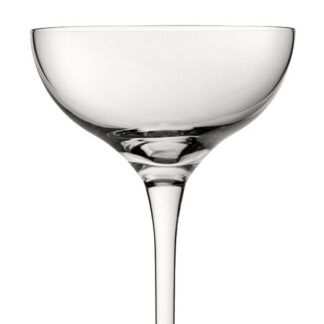
Carmen Coupe 6.5oz (18cl), set of 6
£68.99 Add to cart -
In stock

Charleston Coupe 9oz (26cl), set of 24
£409.99 Add to cart -
In stock

Eden Coupe 10oz (28cl), set of 12
£150.99 Add to cart -
In stock

Elysia Champagne Coupe 9oz (26cl), set of 24
£268.99 Add to cart -
In stock

Estrella Coupe 8.5oz (24cl), set of 12
£113.99 Add to cart -
In stock

Everest Coupe 9.84 x 18.1cm H 21.3cl (3 7/8 x 7 1/8″ 7 1/2oz), set of 12
£151.99 Add to cart -
In stock

Florian Champagne Coupe 16.51cm H 24cl, set of 12
£135.99 Add to cart -
In stock

FT Koshu Coupe 6oz(17cl), set of 6
£28.99 Add to cart -
In stock

GenWare Stainless Steel Coupe Glass 22cl/ 7.7oz
£18.99 Add to cart -
In stock

GenWare Vintage Steel Coupe Glass 22cl/ 7.7oz
£22.99 Add to cart -
In stock

Hayworth Coupe 10.25oz (29cl), set of 12
£153.99 Add to cart -
In stock
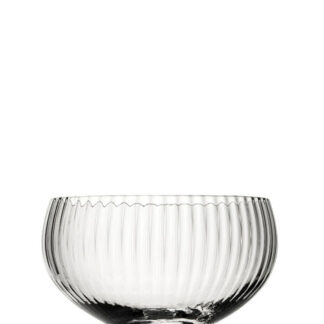
Hayworth Coupe 5.5oz (16cl), set of 6
£65.99 Add to cart -
In stock
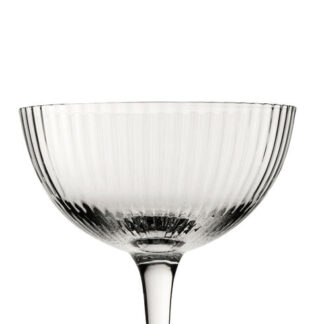
Hayworth Deep Coupe 8oz (23cl), set of 6
£66.99 Add to cart -
In stock

Hayworth Straight Sided Coupe 10oz (29cl), set of 6
£76.99 Add to cart -
In stock

Henley Coupe 9.5oz (27cl), set of 6
£19.99 Add to cart -
In stock

Hepburn Coupe 7oz (20cl), set of 12
£224.99 Add to cart -
In stock
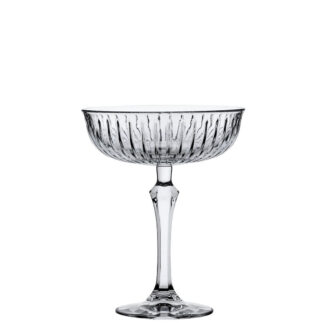
Joy Coupe 8.75oz (25cl), set of 8
£72.99 Add to cart -
In stock
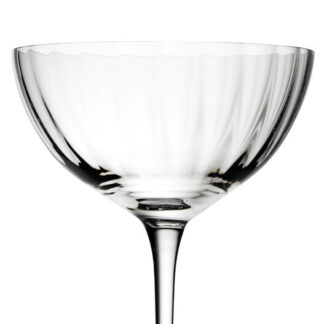
Kate Optic Coupe 10.5oz (30cl), set of 6
£72.99 Add to cart -
In stock

Loire Coupe 8.5oz (24cl), set of 6
£44.99 Add to cart
Showing 1–24 of 47 results
A coupe is a shallow, saucer-shaped bowl on a stem. It started life as a champagne coupe in the nineteenth century, fell out of favour for sparkling wine once flutes took over, and came back as a cocktail glass in its own right. Bowls usually run from 150ml to 250ml, which suits the 90 to 120ml a shaken or stirred drink comes to once strained.nnThe reason bartenders reach for it is simple. The bowl curves inwards near the rim, so a drink that shifts as you carry the glass runs back towards the middle rather than over the edge. It holds a martini, a daiquiri or a manhattan just as well as a V-shaped glass, with far less risk of wearing it.
Which type do you need?
Coupes vary mostly in how deep and how wide the bowl is, which changes both the capacity and how long a drink stays cold.
| Type | Best for | Worth knowing |
|---|---|---|
| Champagne coupe | Sparkling wine served the old-fashioned way, and cocktail use | The wide, shallow bowl lets bubbles escape faster than a flute |
| Small cocktail coupe, 150ml to 180ml | Standard single-serve cocktails that stay cold to the end | Leaves little headroom for a large garnish or a foamed top |
| Large coupe, 220ml to 250ml | Drinks with egg white foam, or a generous pour | More surface area, so the drink warms up sooner |
| Short-stemmed coupe | Low cupboards, crowded trays and everyday handling | Your hand sits nearer the bowl, so drinks warm slightly faster |
How to choose
Why do bartenders prefer a coupe to a martini glass?
It is about spillage rather than looks. A V-shaped glass has straight walls that meet the rim at a shallow angle, so any movement pushes liquid straight over the edge. A coupe's bowl curves back inwards before it reaches the rim, which sends a moving drink towards the centre instead. The stem is usually shorter and thicker too, which makes the glass steadier on a tray and less prone to snapping during washing up. The cocktail itself is unaffected, so the choice is purely practical.
Can you drink champagne from a coupe?
You can, and for a century that is exactly what a champagne coupe was for. The trade-off is bubbles: the wide, shallow bowl gives sparkling wine a large surface area, so it loses its fizz and its aroma noticeably faster than it would in a flute or a tulip glass. For a toast that is drunk quickly, or for a champagne cocktail with sugar and bitters, none of that matters much. For a bottle sipped over an evening, a narrower glass keeps it lively for longer.
What size coupe should you buy?
For general cocktail use, 180ml to 200ml is the useful middle. It holds a standard 90 to 120ml drink with enough space above for a twist or a dusting of nutmeg, without so much surface area that the cocktail warms while you drink it. Go smaller, around 150ml, if you like short, very cold serves. Go up to 250ml only if you regularly make drinks with egg white or aquafaba, where the foam needs somewhere to sit above the liquid.
Common questions
What are coupe glasses used for?
Coupe glasses hold cocktails served up, meaning shaken or stirred with ice and then strained so no ice reaches the glass. Daiquiris, martinis, manhattans, sidecars and sours all suit them. They also work for sparkling wine, which is what the champagne coupe was designed for, though a flute keeps the bubbles going for longer.
How much does a coupe glass hold?
Most coupes hold between 150ml and 250ml filled to the brim. The drink itself is smaller, usually 90 to 120ml after straining, so the rest is headroom that stops the glass slopping when you carry it. Larger coupes above 250ml exist but a drink with no ice in it warms noticeably before you reach the bottom.
Is a champagne coupe the same as a cocktail coupe?
They are the same shape and the terms are used interchangeably. Historically the champagne coupe came first and tends to be wider and shallower, while glasses sold specifically for cocktails often have a slightly deeper bowl and a sturdier stem. Either will serve both jobs perfectly well in a home bar.
Why did coupes stop being used for champagne?
The wide, open bowl lets carbonation and aroma disperse quickly, so flutes and later tulip-shaped glasses took over during the twentieth century for anyone drinking sparkling wine slowly. The often-repeated story that the coupe was moulded on a royal figure's anatomy has no historical basis. Its return has been as a cocktail glass rather than a wine one.
Are coupe glasses dishwasher safe?
Sturdier pressed-glass coupes generally are, but thin blown or crystal ones are better hand-washed. The rim is the vulnerable part, and coupes are wide enough that they knock against other items in a crowded basket. Repeated hot cycles also cloud glass over time. Wash in warm soapy water, rinse and dry with a soft cloth.