Strainers
A strainer holds back ice and pulp when pouring a mixed drink. Hawthorne strainers, with a coiled spring, suit shaken drinks from a Boston tin; julep strainers suit stirred drinks from a mixing glass.
- Hawthorne strainers have a coiled spring and fit Boston tins
- Julep strainers are perforated and used for stirred drinks
- Fine mesh strainers catch small pulp and ice shards
- Double straining uses a Hawthorne and a fine mesh together
Showing 1–24 of 39 results
-
In stock
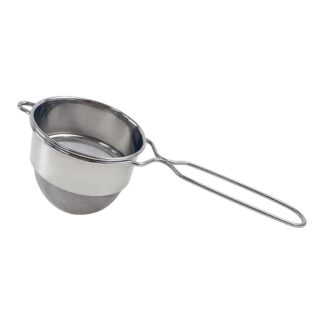
‘The Gorky’ Fine Mesh Strainer
£6.99 Add to cart -
In stock
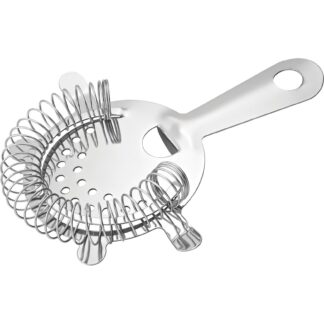
Cocktail Strainer 4 Prong, set of 6
£14.99 Add to cart -
In stock

Copper Fine Mesh Strainer, set of 6
£53.99 Add to cart -
In stock
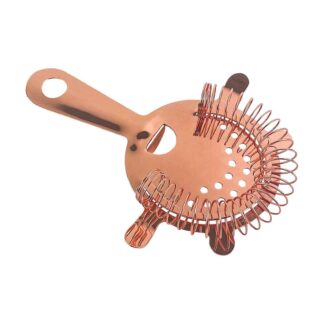
Copper Plated 4 Ear Hawthorne Strainer
£5.99 Add to cart -
In stock

Copper Plated Julep Strainer
£6.99 Add to cart -
In stock
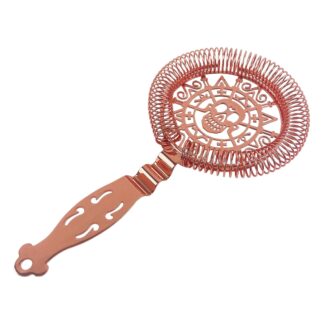
Copper Plated Skull Strainer
£16.99 Add to cart -
In stock

Copper Premium Julep Strainer
£23.99 Add to cart -
In stock

Deluxe Copper Hawthorne Strainer 2 Prong, set of 6
£94.99 Add to cart -
In stock

Deluxe Hawthorne Strainer 2 Prong, set of 6
£75.99 Add to cart -
In stock
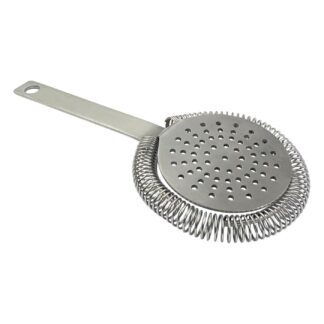
Euro Fine Spring Strainer Stainless Steel
£9.99 Add to cart -
In stock
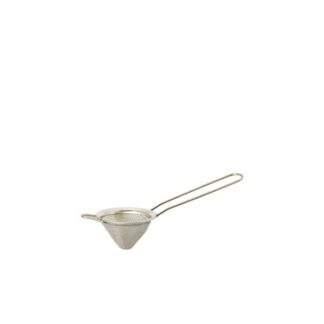
Fine Mesh Conical Bar Strainer
£6.99 Add to cart -
In stock

Fine mesh conical strainer, 8cm
£6.00 Add to cart -
In stock
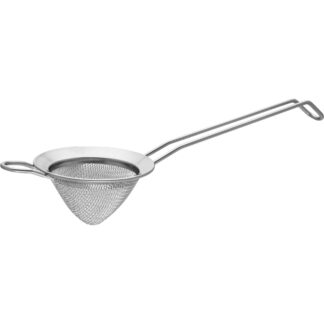
Fine Mesh Strainer 9″ (23cm), set of 24
£4.99 Add to cart -
In stock
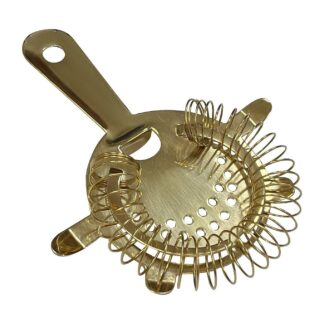
Gold Plated 4 Prong Hawthorne Strainer
£6.99 Add to cart -
In stock

Gold Plated Fine Mesh Strainer
£9.99 Add to cart -
In stock

Gothic Stainless Steel Skull Cocktail Strainer
£13.99 Add to cart -
In stock
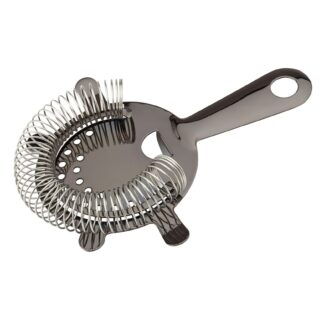
Gunmetal Cocktail Strainer – 4 Prong, set of 6
£128.99 Add to cart -
In stock

Hawthorne Strainer
£11.99 Add to cart -
In stock

Julep Strainer
£5.99 Add to cart -
In stock
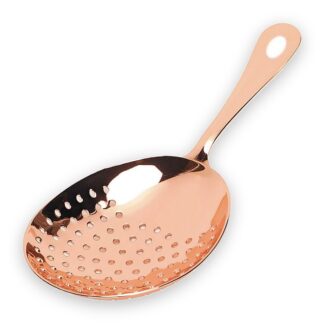
Julep strainer, copper finish
£9.50 Add to cart -
In stock

Mezclar Antique Brass Plated Strainer
£18.99 Add to cart -
In stock
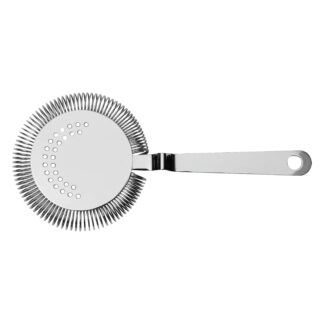
Mezclar Round Stainless Steel Strainer
£13.99 Add to cart -
In stock

Mezclar Round Strainer Copper Plated
£17.99 Add to cart -
In stock

Ninja Cocktail Strainer Stainless Steel
£8.99 Add to cart
Showing 1–24 of 39 results
Most people only need one strainer to start: a Hawthorne, which fits a Boston tin and handles the great majority of shaken drinks. Julep strainers come in once you're making stirred classics in a mixing glass, and fine mesh strainers are for catching small pulp or ice fragments from muddled ingredients. Buying all three at once is rarely necessary u2014 the right order to add them usually follows the order you'll start making different styles of drink.
Which type do you need?
The three strainer types are built for different tools, and for different amounts of pulp or ice.
| Type | Best for | Worth knowing |
|---|---|---|
| Hawthorne | Shaking drinks in a Boston or cobbler tin | The spring can loosen over time and needs occasional tightening |
| Julep | Stirred drinks made in a mixing glass, like a Martini | Not designed for shaken drinks, since it lets more through |
| Fine mesh | Removing small ice shards or fruit pulp from muddled drinks | Slows the pour and needs washing more often to stop it clogging |
How to choose
Which strainer do you actually need first?
If you're buying one strainer, make it a Hawthorne. It fits directly on top of a Boston tin, its coiled spring flexes to seal against the rim, and it works for the great majority of shaken drinks, which is what most people make first. A julep strainer earns its place once you're making stirred drinks u2014 Martinis, Negronis, Manhattans u2014 in a mixing glass, since a Hawthorne's spring isn't designed to sit inside a glass. A fine mesh strainer is the third purchase, useful once you start muddling fruit or herbs and want to catch the small bits a Hawthorne lets through. Most people don't need all three on day one.
What is double straining, and when should you do it?
Double straining means pouring a shaken drink through a Hawthorne strainer and a fine mesh strainer at the same time, one held over the other. It's worth doing whenever a drink has been shaken with muddled fruit, herbs, or anything that leaves small solid bits behind u2014 a Hawthorne's coiled spring catches ice but lets pulp through easily. For a simple shaken drink with just spirits, juice and syrup, a Hawthorne on its own is usually enough. It matters most for drinks with mint, berries or egg white, where a smoother pour makes a real difference to how the drink looks and feels.
Hawthorne vs julep: what's actually different?
A Hawthorne strainer has a coiled spring around its edge that flexes to seal against a Boston tin, and small holes or slots that let liquid through while holding back ice. A julep strainer is a single perforated bowl shape, traditionally used to strain a drink stirred in a glass, without the spring getting in the way of the glass's rim. In practice a Hawthorne can double up for stirred drinks in a pinch, but a julep strainer sits more securely in a mixing glass and is the traditional choice for stirred classics.
Common questions
Do I need a Hawthorne and a julep strainer?
Not to start with. A Hawthorne strainer covers shaken drinks, which is where most beginners start, and it works reasonably well for stirred drinks too if it's all you own. A julep strainer is worth adding once you're regularly making stirred classics like a Martini or Manhattan in a mixing glass, since it sits more securely in a glass than a Hawthorne's spring does.
What is a fine mesh strainer for?
A fine mesh strainer catches small ice shards and pulp that a Hawthorne strainer's coiled spring lets through, which matters most for drinks made with muddled fruit, fresh herbs or egg white. It's typically used alongside a Hawthorne, held directly underneath it while pouring, rather than as a strainer on its own.
Why does my Hawthorne strainer let ice through?
Usually because the coiled spring has loosened or lost its shape with regular use, or because it doesn't quite match the size of your shaker tin. Try tightening the spring slightly with your fingers, or check you're pressing it firmly against the rim as you pour. A mismatched strainer and tin is a common cause, especially with mixed-brand sets bought separately.
Can I use a tea strainer instead of a cocktail strainer?
It works as a stand-in for fine straining, and plenty of people improvise this way before buying anything dedicated. It won't seal against a shaker tin the way a Hawthorne does, though, so you'll still need something to hold back the ice first u2014 a slotted spoon, or the shaker's own lid if it has one built in.
How do I stop a strainer's spring going rusty?
Dry it fully after washing rather than leaving it wet in a drawer, since the coiled spring has far more surface area for moisture to sit in than the flat body of the strainer. Stainless steel resists rust well but isn't immune if left damp for long periods, particularly in a humid cupboard near a dishwasher or sink.